AI Receptionist vs Answering Service: Which Is Right for Your Trades Business?
If you run a trades business, you have probably weighed up an answering service at some point. Someone to pick up when you cannot. Now there is another option: an AI receptionist. Both answer the phone. What happens after that is very different.
Here is an honest comparison to help you decide which suits your business.
What a traditional answering service does
A live answering service or call centre puts a person on the line. They read from a script, take a message, and pass it to you by email, text or a portal. Good ones are polite and reliable.
The limit is what happens next. In most cases the agent is not working inside your job management software, so the message still has to be read, the customer looked up, and the job typed in by someone on your team. And the agent is answering for many businesses at once, so they rarely know your customers.
What an AI receptionist does
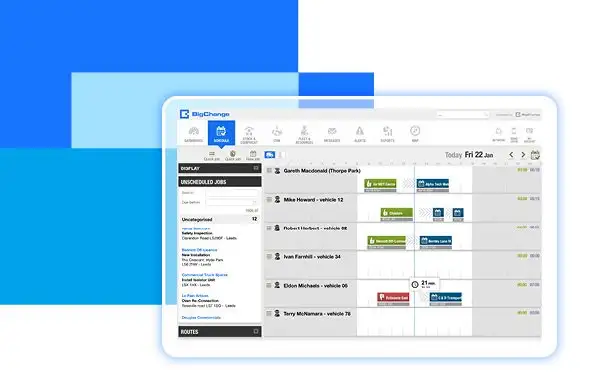
An AI receptionist holds a natural conversation and is connected to your systems. The JobPerfect AI receptionist recognises returning customers by phone number, confirms which site the work is for, and books it straight into BigChange, Simpro or Jobber. True emergencies go to your on-call technician.
Side by side
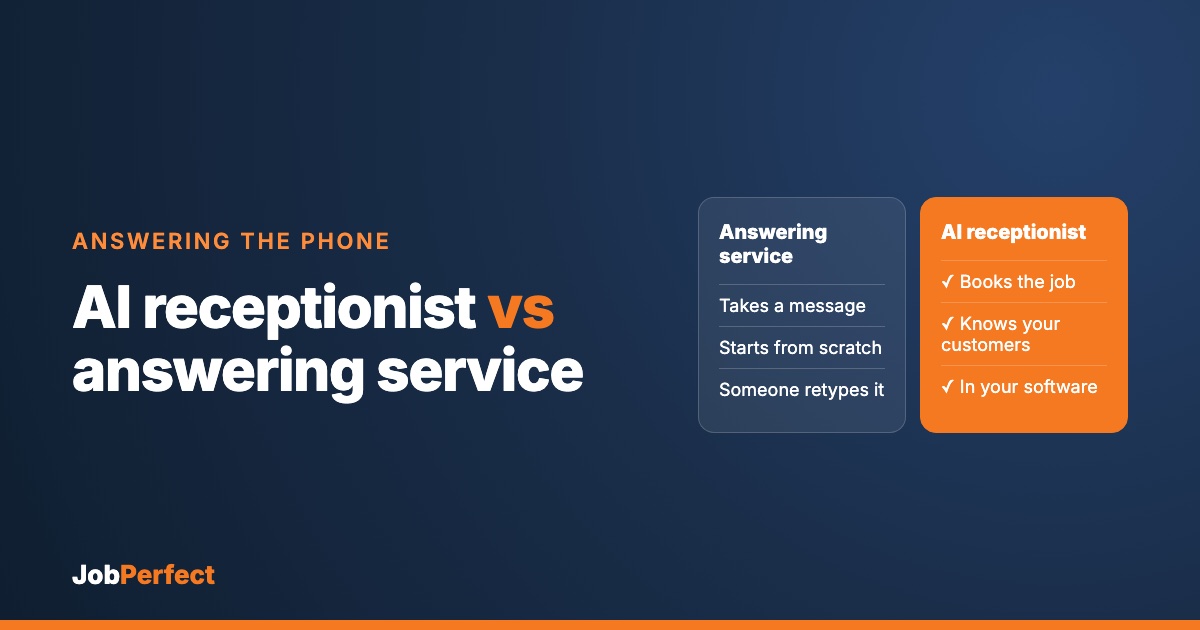
- Answers every call: an answering service can queue at peak times; an AI receptionist answers every call at once, even when ten come in together.
- Knows your customers: an answering service usually starts from scratch; the AI looks the caller up in your system and greets them by name.
- Books the job: an answering service takes a message; the AI creates the job or request in your software.
- Emergencies: both can escalate, but the AI follows your on-call rotation automatically and tries a backup if the first tech does not answer.
- Record of the call: an answering service sends a summary; the AI keeps a full transcript and puts the key details in the job.
- Cost model: answering services typically charge per minute or per call; AI pricing depends on the provider and your call volume.
Where a human service still makes sense
An AI receptionist is not the right answer for every call. If most of your calls are long, sensitive conversations, or you want a human voice on every single call as a matter of brand, a live service may suit you better. Many businesses use both: AI for the volume, people for the exceptions.
Questions to ask either provider
- Does it book into my software, or just send me a message?
- Does it recognise my existing customers and their sites?
- How does it handle emergencies and my on-call rotation?
- Can I read or hear every call afterwards?
- Can I hear it before I sign?
Hear it for yourself
The quickest way to judge an AI receptionist is to call one. Ours is on (289) 672‑1496. After hours, see how CallRoster AI handles emergencies, and use the Missed Calls Calculator to see what unanswered calls cost you today.
Frequently asked questions
Will callers know they are talking to AI?
We recommend being upfront, and the receptionist can introduce itself as an AI assistant for your business. What callers want most is their problem booked quickly.
Can it transfer to a person?
Yes. Emergencies go to your on-call technician, and you can set other situations that should reach a person.
Is it only for after hours?
No. Many businesses use it during the day for overflow and lunch breaks, and full time after hours.
What does it cost?
It depends on your call volume and setup. Book a demo and we will walk you through it.
See it on your own business
Book a demo and we will set it up to answer as your business, so you can call in and hear the difference.
Book a demo, or hear our AI receptionist for yourself: call (289) 672‑1496.